

About Kallakurichi District
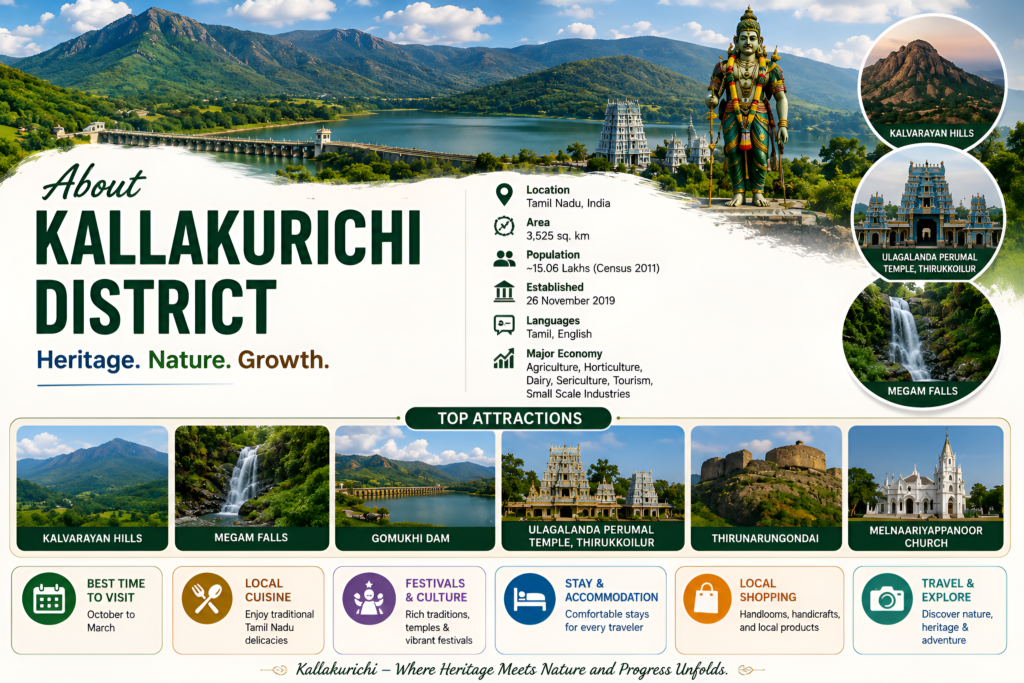
Kallakurichi District is one of the prominent districts of Tamil Nadu, known for its rich heritage, scenic landscapes, agricultural importance and cultural diversity. The district was officially formed on 26 November 2019 and features fertile agricultural plains along with the beautiful Kalvarayan Hills, forests and waterfalls. Agriculture is a major economic activity, with paddy, maize, sugarcane and black gram being important crops, supported by the Gomukhi and Manimuktha dams. Kallakurichi is also home to historic temples, cultural landmarks and scenic attractions such as Ulagalanda Perumal Temple, Veeratteswarar Temple, Kabilar Kundru, Megam Falls and Periyar Falls. With good connectivity, natural beauty, historical significance and developing infrastructure, Kallakurichi represents a harmonious blend of heritage, nature and growth, contributing to the tourism, agriculture, trade and overall development of Tamil Nadu.
Ancient and Early History
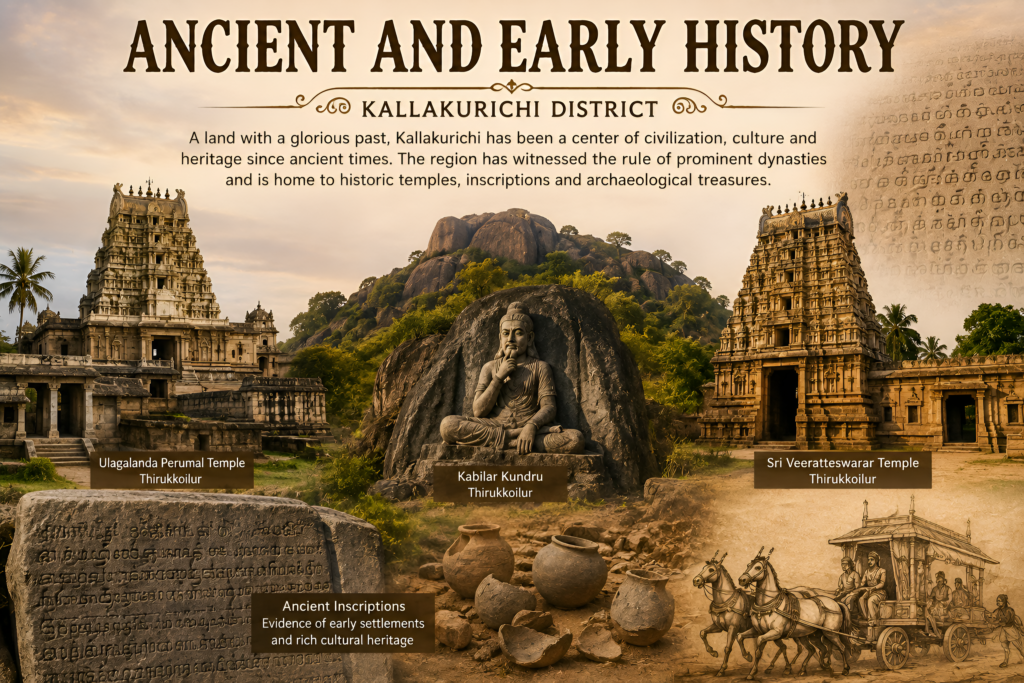
Kallakurichi District has a rich and ancient historical heritage, with roots extending back to the early periods of Tamil history. The region witnessed the rule of prominent dynasties including the Cholas, Pandyas, Pallavas and Vijayanagara rulers, contributing to its cultural and architectural development. Areas such as Thirukkoilur, Rishivandiyam and Tirunarungondai preserve ancient temples, inscriptions and archaeological remains that reflect the region’s religious and social traditions. Kabilar Kundru at Thirukkoilur, associated with the Sangam poet Kabilar, is an important historical landmark, while the Ulagalanda Perumal Temple and Sri Veeratteswarar Temple showcase the region’s architectural heritage. The traditions of the Kalvarayan Hills and surrounding communities further reflect the district’s long-standing cultural identity, making Kallakurichi an important part of Tamil Nadu’s ancient history and heritage.
Major Towns and Population Details
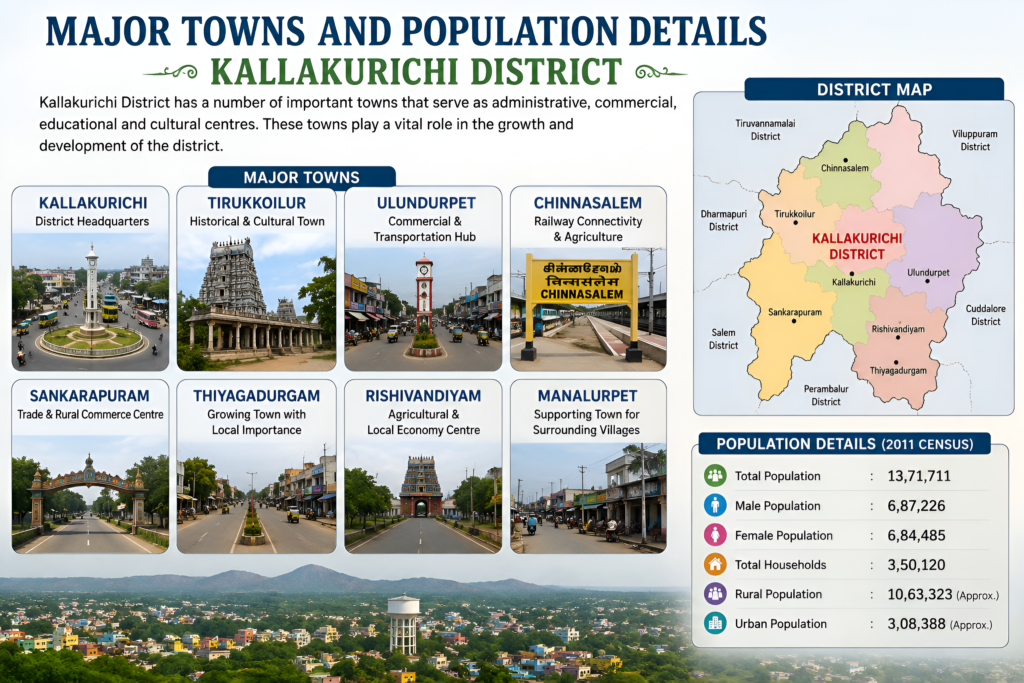
Kallakurichi District has several important towns that serve as administrative, commercial, educational, agricultural and cultural centres. Kallakurichi, the district headquarters, is a key centre for administration, trade and education, while Tirukkoilur is known for its historic temples and cultural heritage. Ulundurpet, Chinnasalem and Sankarapuram are important for transportation, railway connectivity, agriculture and local commerce, while Thiyagadurgam, Rishivandiyam and Manalurpet contribute to the district’s development. According to the 2011 Census, the district had a population of around 13.7 lakh, with a significant majority living in rural areas and depending on agriculture, trade, small-scale industries and services. These towns and surrounding villages form an important part of the district’s social and economic development.
Kallakurichi District – Key Highlights
Area
3,520 km²
Population
13.7 Lakh+

Spoken
Languages
Tamil, Telugu, English
and other languages

Economy
Agriculture &
Agro-based Industries
Economy of Kallakurichi Distric
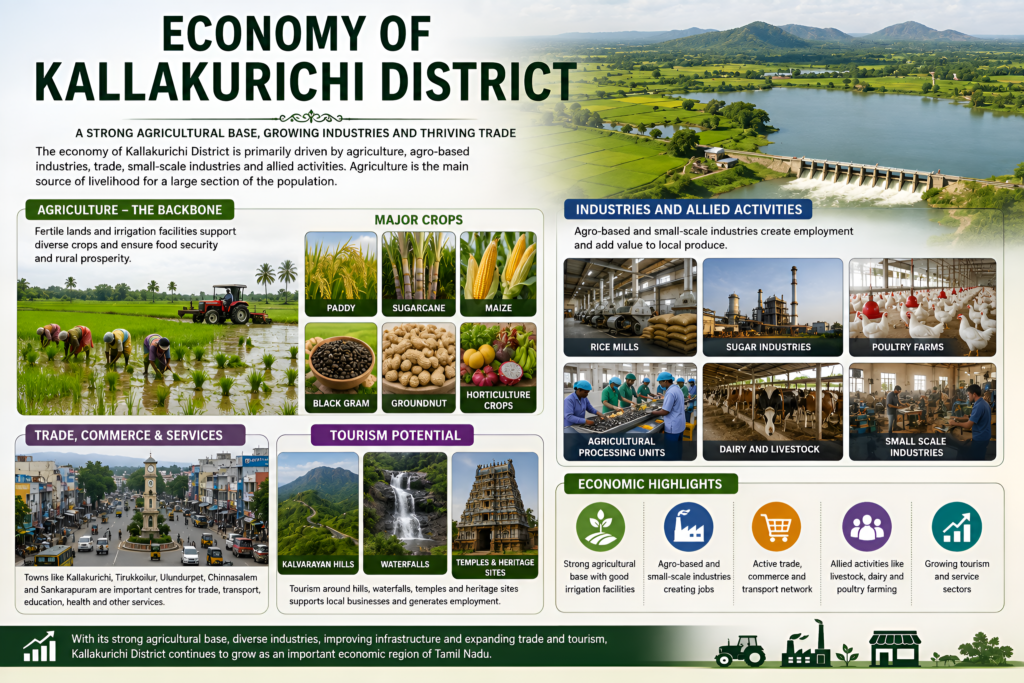
The economy of Kallakurichi District is primarily driven by agriculture, agro-based industries, trade, small-scale industries and allied activities. Fertile agricultural lands support major crops such as paddy, sugarcane, maize, black gram, groundnut and horticultural crops, while the Gomukhi and Manimuktha dams provide important irrigation support. The district is also known for rice mills, sugar-related industries, poultry farms, agricultural processing units, dairy farming and livestock rearing, which provide employment and strengthen the rural economy. Towns such as Kallakurichi, Tirukkoilur, Ulundurpet, Chinnasalem and Sankarapuram serve as important centres for trade, commerce and services. Tourism around the Kalvarayan Hills, waterfalls, temples and heritage sites also supports local businesses. With its strong agricultural base, growing industries, improving infrastructure and expanding tourism, Kallakurichi continues to grow as an important economic region of Tamil Nadu.
Geography and Natural Features
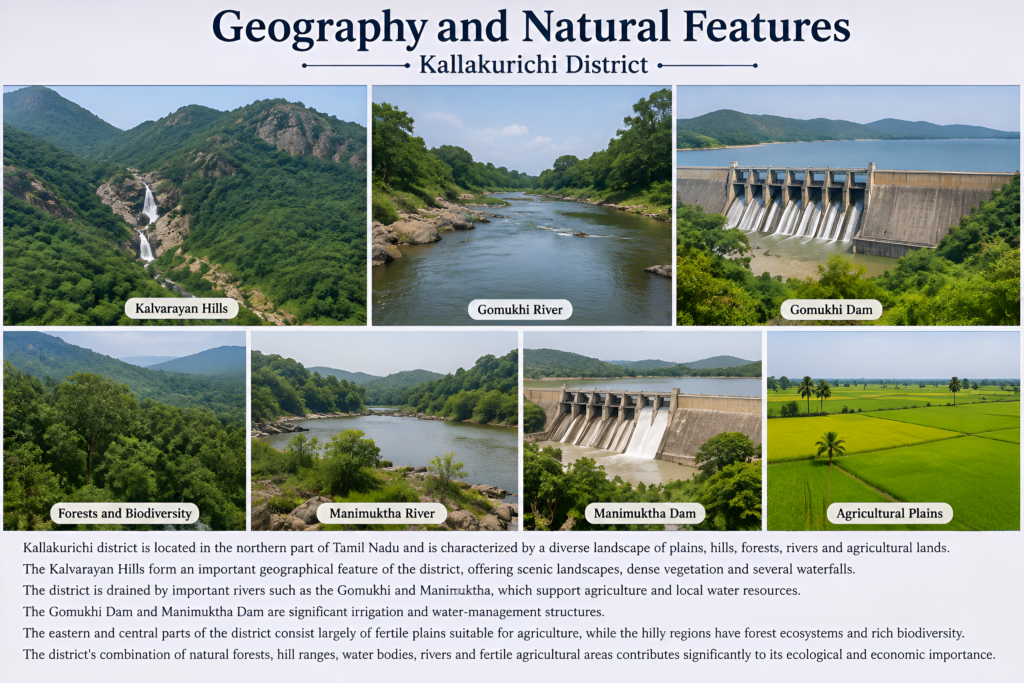
Kallakurichi district is located in the northern part of Tamil Nadu and is characterized by a diverse landscape of plains, hills, forests, rivers and agricultural lands. The Kalvarayan Hills form an important geographical feature of the district, offering scenic landscapes, dense vegetation and several waterfalls. The district is drained by important rivers such as the Gomukhi and Manimuktha, which support agriculture and local water resources. The Gomukhi Dam and Manimuktha Dam are significant irrigation and water-management structures. The eastern and central parts of the district consist largely of fertile plains suitable for agriculture, while the hilly regions have forest ecosystems and rich biodiversity. The district’s combination of natural forests, hill ranges, water bodies, rivers and fertile agricultural areas contributes significantly to its ecological and economic importance.
Administrative Divisions
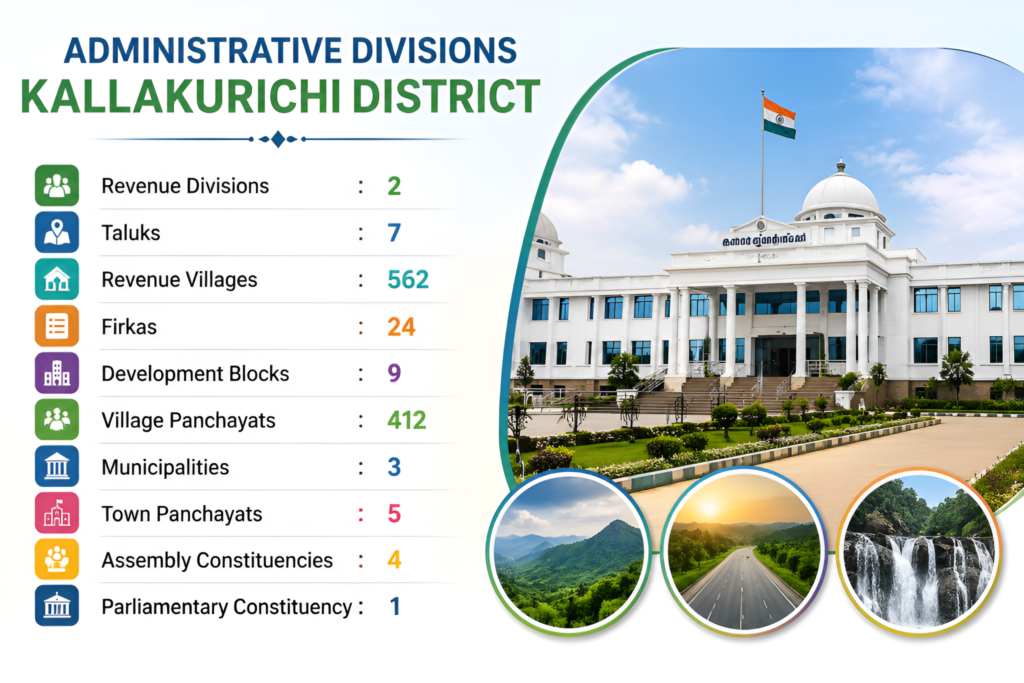
Kallakurichi district is administratively organized into 4 Revenue Divisions, 7 Taluks and 9 Blocks, which help in the effective management and delivery of government services to the people. The district administration functions through the District Collectorate, supported by revenue, rural development and local administrative authorities. The major Revenue Divisions include Kallakurichi, Tirukoilur, Ulundurpet and Sankarapuram. The district has important urban and rural administrative centres, with Kallakurichi serving as the district headquarters. The Block Development Offices and Village Panchayats play an important role in implementing rural development programmes, while municipalities and town panchayats manage urban civic services. These administrative divisions ensure efficient governance, public service delivery and development across the district.
Revenue Administration
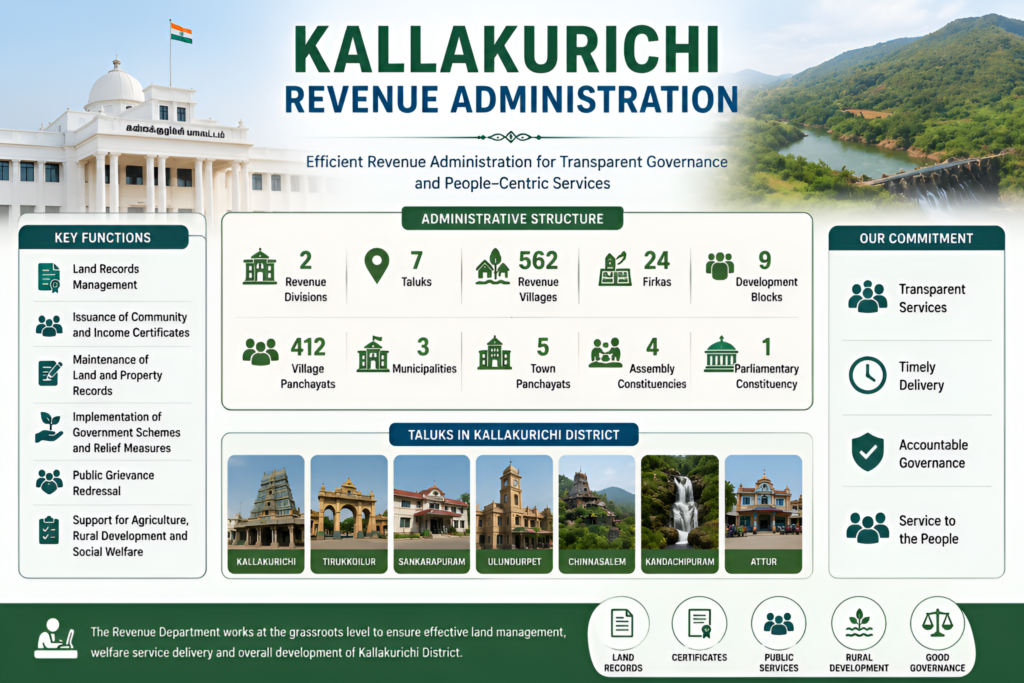
Kallakurichi District’s Revenue Administration is responsible for land administration, revenue collection, maintenance of land records, issuance of revenue certificates, public grievance redressal and implementation of various government schemes and services. The district has 2 Revenue Divisions—Kallakurichi and Tirukoilur—7 Revenue Taluks, 24 Revenue Firkas and 562 Revenue Villages. The District Revenue Officer assists the District Collector in supervising revenue-related activities, while Tahsildars and other revenue officials manage taluk- and village-level administration. The department handles important services such as Patta transfers, land records, Jamabandi, encroachment matters, community and income certificates, civil supplies and disaster management, ensuring efficient revenue management and accessible government services to citizens.